Gut Health Supplement Ingredients: Serving Size on Labels
Quick Answer: How Does Serving Size Inflate a Supplement Label?
Serving size changes the numbers printed on a supplement label. If a company defines a serving as three capsules instead of one, every ingredient figure is printed three times larger, with nothing added to the capsule you swallow. A proprietary blend also hides how a combined weight is split, so compare labels per capsule.
- Always check: how many capsules or scoops make one serving.
- Then divide: convert every amount down to a per-capsule figure before comparing brands.
- Watch for: a blend total with no individual amounts underneath it.
The serving is whatever the company decides it is
Start with the fact that makes everything else possible: on a Supplement Facts panel, the serving size is chosen by the manufacturer. That is the starting point the NIH Office of Dietary Supplements gives consumers for reading a Supplement Facts panel, and there is no external authority setting a standard serving for a botanical blend or a probiotic capsule, the way there is for a slice of bread. A company decides that a serving is one capsule, or two, or three, or a heaped scoop, and every number on the panel is then expressed per that unit.
This is not fraud and it is not hidden. It is printed at the top of the panel, in the same small type as everything else, and most shoppers walk straight past it to the ingredient amounts underneath. That is exactly why it works. A number is only meaningful with its unit attached, and the unit is the line nobody reads.
The consequence is that two panels sitting side by side may not be comparable at all. Product A shows an ingredient at a certain milligram figure per serving and Product B shows a figure three times larger. If A is a one-capsule serving and B is a three-capsule serving, they are identical per capsule. The only way to know is to look up, find the serving size line, and normalise before drawing any conclusion.
Gut health supplement ingredients and the multi-capsule serving
Multi-capsule servings are especially common in this corner of the market, for a mixture of good and bad reasons. The honest reason is bulk: fibres, greens powders and some botanical extracts genuinely will not fit in one capsule, and splitting them across two or three is the only way to deliver a study-sized amount. Viscous fibres are the clearest case, as our breakdown of natural hunger suppressant ingredients explains. Nobody should be criticised for that.
The less honest reason is optics. A formula that would look thin at one capsule looks respectable at three, and if the directions say to take three capsules daily then no rule has been bent. What gets lost is comparability, and often adherence too. A product that needs three capsules taken twice a day is a product many people will stop taking, which quietly makes the whole question of dose academic.
There is a related move worth naming: printing amounts per serving while directing more than one serving per day. A panel showing a per-serving figure with directions of two servings daily describes a daily intake twice the size of the panel figure, which flatters the product on the shelf and inflates how quickly the bottle empties. Neither is disclosed anywhere except in the arithmetic you do yourself.
Read the panel, not the headline
Serving size, capsule count and directions are all printed on the official product page — the right place to check the arithmetic before you order.
See the Official Supplement FactsProprietary blends: a real total with a hidden split
A proprietary blend groups several ingredients under one combined weight. The total is genuine, and the ingredients within it must be listed in descending order by weight, so the first name in the list is the heaviest. What is missing is the split. A blend containing five botanicals under one figure could be an even distribution, or it could be almost entirely the cheapest ingredient with traces of the other four.
Descending order is the one lever you have. If the ingredient a product is marketed on appears last in its blend, it is the smallest component of that blend by weight, whatever the front of the pack implies. If it appears first, it is the largest, though you still do not know by how much. That is a genuinely useful signal and it costs you ten seconds.
Blends are defended on the grounds of protecting a formula from copying, and that argument has some merit. It also happens to make dose comparison impossible, which is convenient. A brand that publishes full individual amounts is giving up nothing you could not reverse-engineer anyway, and is telling you it is comfortable being compared. That willingness is worth more than most marketing claims.
Five label devices and how to correct for each
| Device on the panel | What it does to the impression | How to correct for it |
|---|---|---|
| Three-capsule serving | Every amount printed three times larger | Divide all amounts by capsules per serving |
| Two servings per day in the directions | Panel understates daily intake and pack burn rate | Multiply panel figures by servings per day |
| Proprietary blend total | Hides how much of each ingredient you get | Use descending order; treat last-listed as trace |
| Extract with no standardisation figure | Weight looks large, active fraction unknown | Look for a percentage or ratio, e.g. standardised to X% |
| Large servings-per-container number | Pack looks like better value than it is | Divide servings per container by servings per day |
Fairy dusting, extract ratios and the order of the list
"Fairy dusting" is the trade term for including an ingredient in an amount far below anything studied, purely so the name can appear on the label. It is common because names sell and milligrams cost money. The tell is usually a long ingredient list with a small total weight: twenty impressive names cannot all be present at meaningful amounts inside a capsule that holds a limited fill. We work that arithmetic through on a real panel in our look at what Trimoryn's listed amounts realistically support.
Extract wording is the other place where a number can mislead without being false. An extract at a stated weight tells you the weight of the extract, not the amount of the compound anyone cares about. Standardisation is what closes that gap — a percentage or ratio that tells you what fraction of the extract is the active constituent. Without it, a large milligram figure and a small one can deliver the same amount of the thing that matters, or wildly different amounts, and the panel gives you no way to tell.
Every number on a supplement panel is true. What varies is how much work you have to do before it means anything.
This is the same discipline we applied to potency claims in our guide to allergen statements and cross-contamination: identify which parts of the panel a manufacturer is obliged to state accurately, then treat the presentation around them as marketing. Panels are honest documents presented persuasively, and the persuasion is entirely in the framing.
Servings per container and the real cost per day
Servings per container is the least glamorous line on the panel and the one that decides value. A bottle holding sixty capsules with a one-capsule serving is a two-month supply. The same sixty capsules with a three-capsule serving is a twenty-day supply. The bottles look identical on a shelf, and one costs three times as much per day to take.
The arithmetic to do before buying is simple and works without quoting any figure: divide servings per container by servings per day to get days of supply, then divide whatever you would pay by that number of days. That gives you a cost per day, which is the only basis on which two products can be compared. Do this once and the pattern becomes obvious — the pack that looks cheapest on the shelf frequently is not, and a larger pack is only better value if the per-day figure actually falls.
The same calculation matters when you are deciding where to buy weight loss supplements, because bundle offers are priced per pack rather than per day, and a bundle of a fast-burning three-capsule product can cost more per day than a single bottle of a one-capsule one. Working in days of supply removes the guesswork entirely, and it is the same discipline we apply throughout our buyer's guide to weight loss capsules.
Daily values, dagger symbols and what they do not mean
Panels show a percent Daily Value column, and for botanicals, probiotic strains and most specialty ingredients that column shows a dagger symbol instead of a percentage. That symbol means no Daily Value has been established for the ingredient. It is not a warning, not a quality signal and not a red flag. It is a statement that no official reference amount exists to compare against.
What it does mean practically is that the dagger removes your easiest yardstick. For vitamins and minerals you can see at a glance whether an amount is trivial or substantial relative to a reference intake. For a botanical you cannot, so the only benchmark left is the amount used in published research on that specific ingredient. That is more work, and it is the work the dagger quietly hands to you.
It is also worth noticing which ingredients carry a percentage well over one hundred. That is not automatically a problem, and for several nutrients it is entirely routine, but it is a prompt to check whether the ingredient is one that accumulates and whether you are also getting it from other products. Stacking two formulas that each contain the same fat-soluble vitamin is a common and avoidable mistake.
What a label cannot tell you at all
Being direct about the ceiling: no amount of careful panel reading tells you whether a product works, and content analyses of supplement label accuracy show the printed figure is not always the delivered one. A panel tells you what is claimed to be inside and in what quantity. It does not tell you whether those amounts match doses used in research, whether the ingredients interact, whether the specific combination has ever been studied as a combination, or whether the contents match the label at all — that last question requires independent testing, and published analyses have repeatedly found supplements whose contents differed from their labels.
It also cannot promise an outcome. Nothing here suggests that any supplement diagnoses, treats, cures or prevents any disease, and and as the NIH NCCIH notes for dietary and herbal supplements, evidence for many popular ingredients in this category is genuinely weak or mixed. Reading a panel well protects you from paying for a formula that is mostly presentation. It does not convert a weakly evidenced ingredient into a strongly evidenced one. If you want a worked example of how far the evidence goes for common ingredients, our Trimoryn ingredient breakdown goes through them one at a time, including the ones where the data is thin.
Finally, a panel says nothing about you. Age, medication, existing conditions and pregnancy all change what is appropriate, and none of that appears on a carton. Whatever you conclude about the best weight loss dietary supplement for your situation should be checked with a clinician who knows your history, not settled by arithmetic on a shelf.
Medical note: this article is general information, not medical advice. Speak to a healthcare professional before starting any supplement, especially if you are pregnant, nursing, taking medication or managing a health condition.
Scientific references
- NIH Office of Dietary Supplements — Dietary Supplements: What You Need to Know
- NIH NCCIH — Dietary and Herbal Supplements
- Mayo Clinic — Dietary supplements: what to know before you buy
- PubMed — published analyses of supplement label accuracy
- Harvard T.H. Chan School of Public Health — Vitamins and Minerals
Frequently asked questions
Why do some supplements have a three capsule serving?
Because the serving size is set by the manufacturer, not by a rule. Spreading a formula across three capsules lets every amount on the panel be printed three times larger than a single capsule delivers. It is not dishonest, but it makes two products impossible to compare until you divide back down to one capsule.
What is a proprietary blend on a supplement label?
It is a group of ingredients listed under one combined weight instead of individual amounts. The total is real and the ingredients are ordered heaviest first, but the split between them is hidden, so you cannot tell whether the well known ingredient makes up most of the blend or a trace of it.
How do I compare two supplements fairly?
Convert both to the same unit before comparing. Work out the amount of each ingredient per single capsule, then multiply up to a full day's intake as directed. Then divide the pack size by the servings per container to see how many days it really lasts, which is the number that decides cost.
What does the dagger symbol next to an ingredient mean?
It means no Daily Value has been established for that ingredient. It is common and entirely normal for botanicals and probiotic strains, and it is not a warning. It simply means there is no official reference amount to compare the dose against, so you have to check the research yourself.
Where can I find the Trimoryn serving size on the official website?
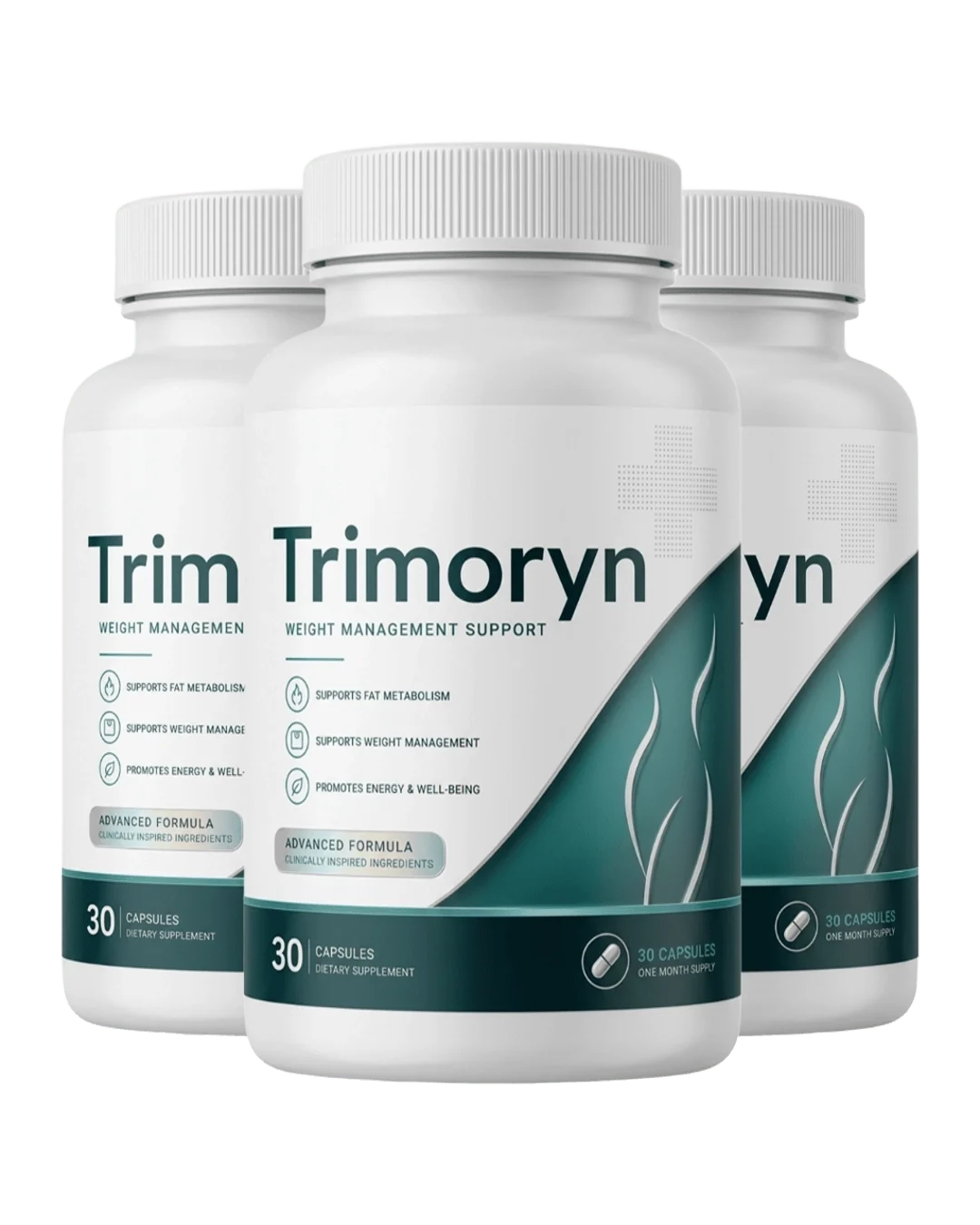
The official Trimoryn website shows the serving directions: one capsule daily, taken before a meal.
Apply the same arithmetic to Trimoryn
Serving size, capsules per bottle and directions are all stated on the official page — work out the days of supply yourself before deciding on any best gut health supplement shortlist.
Check Servings & Supply Options