Berberine for Fat Loss: Benefits and Evidence
Quick Answer: Does Berberine Work for Fat Loss?
Berberine for fat loss shows a modest but real link in research. By activating AMPK and improving insulin sensitivity, it is associated with small reductions in body weight, BMI and waist circumference, mainly in people with metabolic dysfunction. Effects appear strongest at higher daily amounts over eight-plus weeks, alongside diet.
- Mechanism: activates AMPK, improves how the body handles glucose.
- Effect size: modest drops in weight, BMI and waist, not dramatic.
- Best responders: people with insulin resistance or metabolic issues.
Interest in berberine for fat loss has climbed sharply, with roughly 40,500 searches a month and a rising trend line, and much of that attention arrives wrapped in overheated claims. This review sets those aside and looks at what the controlled evidence actually shows. Berberine is a plant alkaloid with a genuine, well-characterised mechanism, and the honest verdict is more interesting than either the hype or the dismissal: it produces modest, real metabolic effects that translate into small amounts of fat loss, and it does so best in the people whose metabolism needs the most help.
The reason berberine deserves a careful look, rather than a quick yes or no, is that its effect depends heavily on who is taking it, at what dose, and for how long. A gram-plus per day for two months in someone with insulin resistance is a very different proposition from a token dose for two weeks in a metabolically healthy person. Get those variables right and the evidence is respectable. Get them wrong and berberine looks useless, which is how a lot of casual coverage misreads it.
How berberine works: AMPK and insulin sensitivity
Berberine's headline mechanism is activation of AMP-activated protein kinase, or AMPK, an enzyme that acts as a kind of cellular energy sensor. When AMPK is switched on, cells shift toward using energy rather than storing it: glucose uptake improves, fatty-acid oxidation increases, and the body becomes more efficient at clearing sugar from the blood. This is the same pathway that exercise and some metabolic medicines engage, which is part of why berberine attracts comparisons it does not always deserve.
The downstream effect that matters most is improved insulin sensitivity. When cells respond better to insulin, the body needs to produce less of it, and lower circulating insulin makes fat storage less favourable and fat release somewhat easier. Berberine also modestly influences gut bacteria and lipid metabolism. None of these effects is dramatic on its own, but together they explain why berberine shows up as a metabolic ingredient with a secondary fat-loss signal, rather than a direct fat-burner. It changes the metabolic environment; the body then does slightly more of the work you want.
What the berberine fat loss evidence actually shows
This is where the careful reading pays off. Meta-analyses that pool randomised trials of berberine indexed in PubMed consistently find statistically significant but modest reductions in body weight, body mass index and waist circumference. The typical picture is a small drop in body weight, a fractional reduction in BMI, and a measurable but not large shrink in waist size over the study period. These are averages across trials of varying quality, and the confidence intervals matter, but the direction is consistent.
Two qualifiers make the numbers honest. First, the effects concentrate in people with metabolic dysfunction: those with insulin resistance, type-adjacent glucose issues, polycystic ovary syndrome or central adiposity tend to respond more clearly than metabolically healthy participants. Second, dose and duration drive the result. Trials that used around 1,000 to 1,500 mg per day, split across meals, for eight weeks or more, show the clearest effects. Shorter or smaller-dose studies show weaker, noisier results. If you only remember one thing, remember that berberine is dose-dependent and slow.
Want a metabolic-support routine you can actually keep?
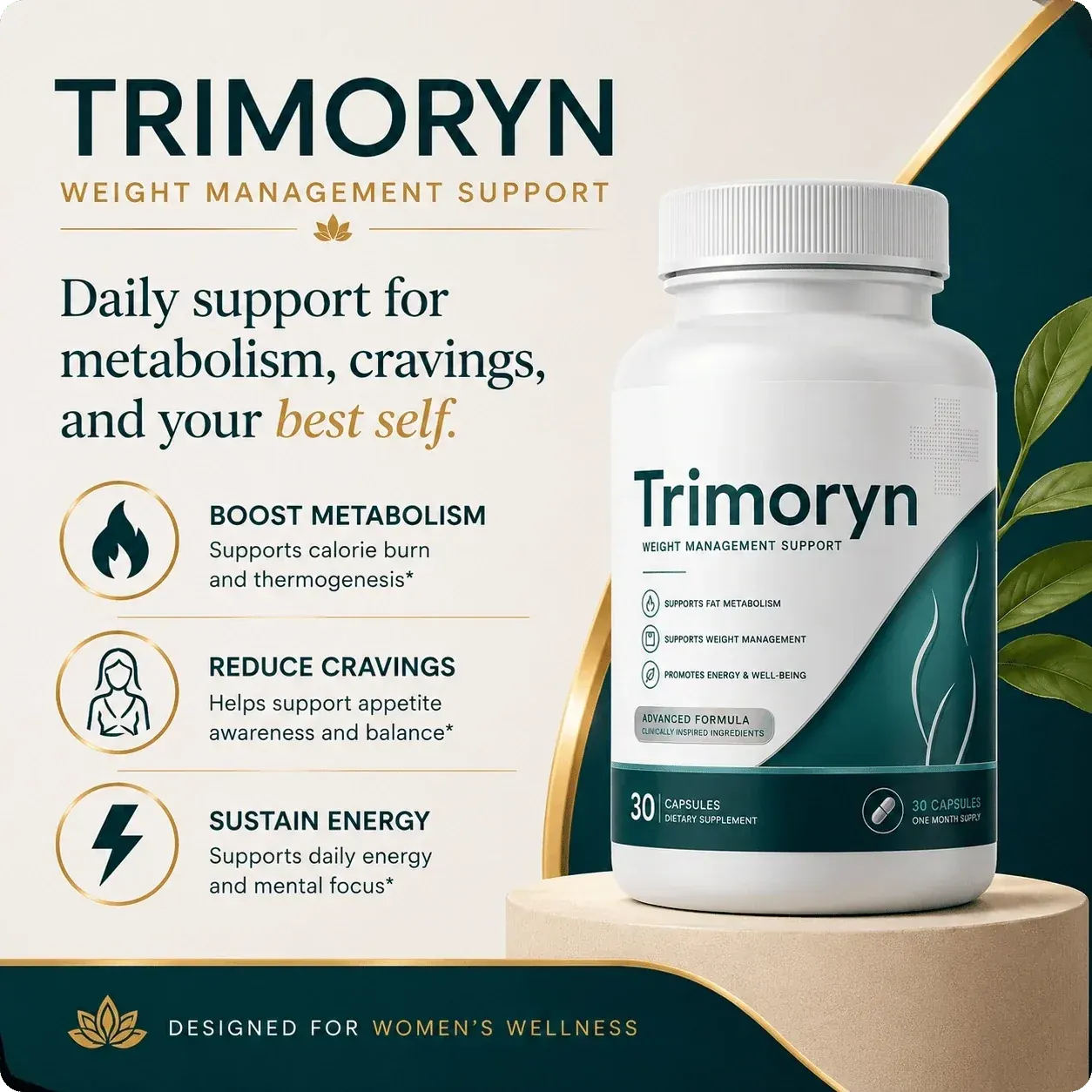
Trimoryn is built as once-daily metabolic and appetite support, pairing a Konjac glucomannan satiety angle with cinnamon bark, prickly pear and mangosteen extracts — and 15 mg of berberine HCl per capsule. See the full ingredient list and directions on the official page before you decide.
See the Full Ingredient ListHow berberine's mechanism maps to Trimoryn
We publish independently, so here is the honest connection rather than a stretch. Trimoryn does contain berberine, but the amount matters far more than the presence. Its label lists Berberine HCl at 15 mg per capsule, in a once-daily blend alongside Konjac glucomannan fibre, mangosteen, prickly pear and cinnamon bark extracts, alpha-lipoic acid, turmeric, resveratrol and two probiotic strains. That 15 mg sits far below the roughly 0.5–1.5 g daily intakes used in the trials summarised above, so it would be dishonest to suggest Trimoryn delivers a trial-equivalent berberine dose. It does not, and nothing on the label supports that claim.
With that stated plainly, the useful point of comparison is philosophical rather than chemical. Berberine works slowly, at an adequate dose, in people doing the dietary work, and its benefit is metabolic support around a plan. A formula like Trimoryn is meant to be used the same way: consistently, over months, as a support layer rather than a standalone cause of fat loss. If you want to see exactly how the ingredients are combined and dosed, our overview of what Trimoryn contains and how it is meant to be used lays it out. And because a low-dose botanical is only ever one part of a plan, it is worth reading how far a supplement can move weight on its own before you decide what to expect from any of them.
Berberine at a glance
| Question | What the evidence suggests |
|---|---|
| Primary mechanism | AMPK activation, improved insulin sensitivity |
| Effect on body weight | Modest reduction, mainly in metabolic dysfunction |
| Effect on waist / BMI | Small but measurable reductions in trials |
| Effective dose | ~1,000–1,500 mg/day, split with meals |
| Time to effect | 8+ weeks of consistent use |
| Best responders | Insulin resistance, PCOS, central adiposity |
Objection 1: "Isn't berberine basically nature's version of a drug?"
You will see berberine marketed with that kind of comparison, and it oversells the case in a way that is worth correcting. Berberine and certain metabolic medicines share an interest in AMPK and glucose handling, but they are not equivalent in potency, evidence base, purity control or safety monitoring. Prescription medicines are dosed, tested and supervised by clinicians for defined conditions; berberine is a supplement with modest, variable effects and no such oversight. Treating them as interchangeable is misleading, and any product that implies equivalence is telling you something about the seller. Berberine is a supportive ingredient, not a substitute for medical treatment, and it never diagnoses, treats or cures anything.
Objection 2: "I tried it and nothing happened"
This is common, and it usually traces back to the three variables that decide berberine's outcome. Were you taking enough, at roughly a gram or more per day split across meals? Did you stay on it for at least eight weeks, given how slowly it acts? And are you someone with metabolic dysfunction, the group that responds most clearly? A metabolically healthy person taking a low dose for a fortnight is running the exact protocol that produces null results in trials. Berberine is not a fast or universal ingredient, and the people it disappoints are frequently the people using it in a way the evidence never supported.
Objection 3: "If the effect is modest, why bother?"
Because modest and consistent is how real fat loss actually happens, and because berberine's benefits extend beyond the scale. Its most robust evidence, in the context the NIH NIDDK sets out for glucose and insulin, is for glucose control and insulin sensitivity, which are worth caring about in their own right for people with metabolic issues. The waist and weight effects come as a secondary benefit of that metabolic improvement. For the right person, using an adequate dose, alongside a controlled diet, berberine tilts the metabolic environment in a helpful direction over months. That is a reasonable role for a supplement, and a far more defensible one than the fat-melting language the category usually reaches for.
Berberine is a slow, dose-dependent metabolic ingredient with a modest secondary fat-loss effect, strongest in people whose metabolism needs the most help. That is less exciting than the marketing, and it has the advantage of being true.
Medical note: berberine can interact with medications, including those affecting blood sugar, and is not recommended in pregnancy or breastfeeding. This article is general information, not medical advice. Speak to a healthcare professional before starting berberine or any supplement.
Who should and should not consider berberine
The evidence points to a fairly specific candidate. Berberine is most reasonable for someone with signs of metabolic dysfunction, such as insulin resistance, elevated fasting glucose or central weight gain, who is already working on diet and activity and wants metabolic support around it, and who can commit to an adequate dose for a couple of months. It is far less compelling for a metabolically healthy person expecting rapid weight loss from a pill. And it is not appropriate for anyone pregnant, breastfeeding, or taking medications it could interact with, particularly glucose-lowering drugs, without medical guidance. Where it fits, it fits as a supportive layer; where it does not, no dose or duration changes that.
What this cannot do, stated plainly
Berberine, which the National Center for Complementary and Integrative Health lists among dietary and herbal supplements, does not diagnose, treat, cure or prevent any disease, including diabetes or obesity, and nothing here should be read as saying otherwise. It does not burn fat directly or target any one area of the body, and it does not produce rapid results. Its documented effects are modest, gradual and dependent on dose, duration and the individual's metabolic starting point. Used realistically, as metabolic support around a diet you are already running, it can add something for the right person. Used as a shortcut past the fundamentals, it will disappoint, exactly as the evidence predicts.
Scientific references
Related reading
Frequently asked questions
Does berberine burn belly fat?
Berberine does not target belly fat directly, but meta-analyses show modest reductions in waist circumference alongside small drops in body weight and BMI, chiefly in people with metabolic dysfunction. It works by activating AMPK and improving insulin sensitivity, which can reduce fat storage over time, rather than by spot-burning fat in any one area.
How much berberine is needed for fat loss?
The trials that show effects generally use around 1,000 to 1,500 mg per day, split into two or three doses with meals, for at least eight weeks. Below roughly one gram a day, or over shorter periods, the metabolic effects are weaker and less consistent, which is a key reason to check the dose on any berberine product's label.
Is berberine better for blood sugar or weight?
Its strongest and most consistent evidence is for glucose control and insulin sensitivity; the weight and waist effects are real but smaller and follow from the metabolic improvement. If you think of berberine as a metabolic-health ingredient that produces modest fat-loss support as a secondary benefit, you have the emphasis right.
Who benefits most from berberine?
People with signs of metabolic dysfunction, such as insulin resistance, elevated fasting glucose or central weight gain, tend to see the clearest response. Those who are already metabolically healthy usually see less. Berberine can interact with medications and is not suitable in pregnancy, so a conversation with a healthcare professional comes first.
Does Trimoryn contain berberine and where can I buy it?
Yes, Trimoryn includes 15 mg of berberine HCL in each daily capsule. You can order it from the official Trimoryn website.
Support your metabolism the consistent way
Slow, steady, adequately dosed and taken alongside a diet, that is how metabolic ingredients earn their keep. See the current Trimoryn ingredients, directions and supply options on the official page.
Check the Official Page