Best Diet Supplements for Weight Loss: What Earns a Place
Quick Answer: What Are the Best Diet Supplements for Weight Loss?
The best diet supplements for weight loss are the few with real mechanisms and honest doses: soluble fibre such as glucomannan, added protein, green tea catechins and berberine. Each gives modest support by raising fullness, nudging metabolism or improving glucose handling. They make a calorie deficit easier to keep.
- Strongest evidence: soluble fibre, protein, green tea catechins, berberine.
- What they do: support appetite, satiety and metabolism at the margins.
- What matters most: adequate dose and a transparent label, not a long list.
Search the phrase and you will find thousands of products competing to be the best diet supplements for weight loss, each louder than the last. Around 27,100 people look this up every month, which tells you two things: the appetite for help is real, and the market knows it. Most of what you will be shown is noise, built on long ingredient lists and larger promises. A small number of ingredients, taken at honest doses, genuinely earn a place in a plan. This guide separates the two, names the ingredients with actual mechanisms, and is candid about how modest the effects are.
The frame that keeps you out of trouble is simple. Supplements aid a calorie deficit; they do not replace one. Nothing in a capsule rewrites the arithmetic of energy balance. What the best options do is make the deficit easier to sustain over the months that matter, by turning down appetite, adding a small metabolic nudge, or improving how your body manages the food you eat. Hold on to that frame and the whole category becomes far easier to shop.
What makes a diet supplement worth taking
Three tests separate a useful supplement from an expensive placebo, and none of them appear in the advertising. The first is mechanism: is there a plausible, measured reason this ingredient would affect body weight, rather than a story that sounds scientific? The second is dose: does the label deliver the amount that was actually studied, or a fraction of it dressed up to look complete? The third is transparency: can you see every ingredient and its exact amount, or is it hidden inside a proprietary blend that could be mostly filler?
An ingredient that passes all three is rare, and the honest ones are quiet about their limits. You will notice that the products worth trusting describe themselves with words like "supports" and "alongside a reduced-calorie diet," while the products to avoid promise pounds lost on a schedule. That difference in tone is not an accident of copywriting. It reflects whether the seller has read the same evidence you are about to.
The diet supplements for weight loss with the strongest evidence
When you strip the category back to ingredients with repeatable, human evidence — the standard applied in the NIH Office of Dietary Supplements review of weight-loss ingredients — the shortlist is short. Here are the ones that keep surviving scrutiny, and exactly what they do.
Soluble fibre (glucomannan and similar)
Viscous soluble fibre is the closest thing the category has to a dependable tool, and its job is unglamorous. Taken with water before a meal, it absorbs liquid and forms a gel that slows how quickly the stomach empties. The result is that a smaller portion feels adequate and fullness lasts longer. It does not burn anything; it makes eating less feel less like deprivation, which is the single hardest part of any diet to sustain. The evidence is stronger for appetite and satiety than for the number on the scale, but appetite is what breaks most plans, so that is not a small thing.
Protein
Protein is the most underrated "supplement" in weight loss precisely because it is so ordinary. Higher protein intake raises satiety hormones, blunts hunger between meals, and helps preserve lean muscle while you are eating in a deficit, which protects your metabolic rate. Whether it arrives as food or a shake, it is one of the few interventions with genuinely strong, consistent support. If you take nothing else from a category roundup, taking protein more seriously is the highest-value move on the list.
Green tea catechins
Green tea extract, standardised for its catechins and usually paired with a little caffeine, produces a small, measurable rise in energy expenditure and fat oxidation. The effect is real and the effect is small; it is easily cancelled by a single snack, and the body adapts. It is worth having as part of a formula, not as a headline. We go deeper into this in our review of the weight loss evidence for green tea and green coffee extracts, including where the trials are stronger and where they thin out.
Berberine
Berberine is the newer entry with rising interest, and for a specific reason: it acts on AMPK and improves insulin sensitivity, with meta-analyses showing modest reductions in body weight, BMI and waist circumference, chiefly in people with metabolic dysfunction. It behaves more like a metabolic ingredient than an appetite one. If your struggle is more about blood-sugar swings and cravings than about portion size, it is the ingredient most worth understanding, which is why we wrote a full review of berberine's benefits and evidence for fat loss.
Want to judge a formula on its label, not its ad?
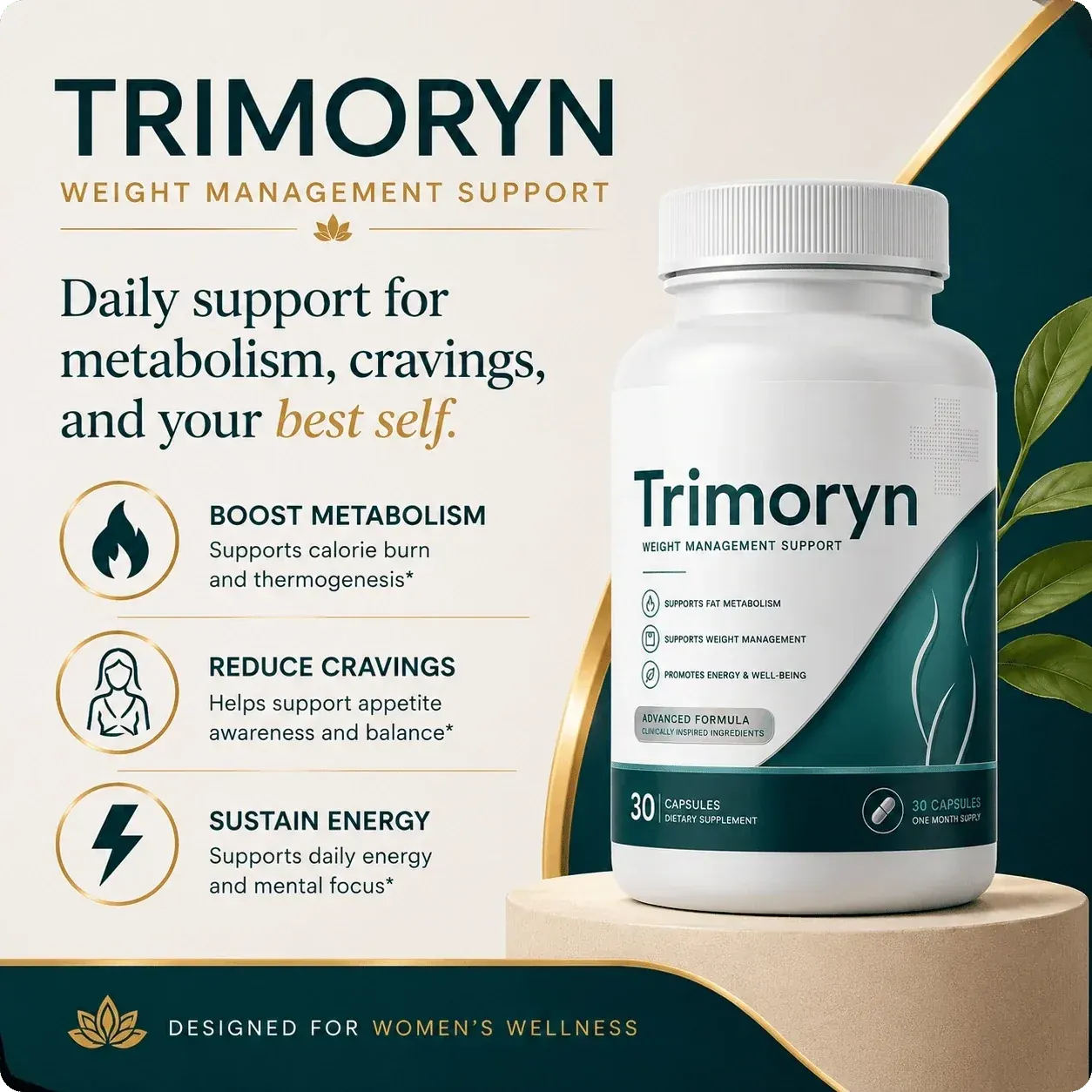
Trimoryn is built as a once-daily fibre-plus-metabolic support around Konjac glucomannan, cinnamon bark, prickly pear and mangosteen extracts, with alpha-lipoic acid, turmeric, berberine HCl, resveratrol and two probiotic strains. The official page lists every ingredient and amount so you can check the dose yourself.
See the Full Ingredient ListWhere Trimoryn fits in the category
We publish independently, so here is the honest placement. Trimoryn is not a magic pill, and it is not sold as one. It is designed as daily fibre-plus-metabolic support: a once-a-day formula that combines a satiety angle of Konjac glucomannan with the small metabolic contributions of cinnamon bark, prickly pear and mangosteen extracts, rounded out with alpha-lipoic acid, turmeric, berberine HCl, resveratrol and two probiotic strains. The point of a formula like this is convenience and adherence. Instead of assembling four separate purchases, you take one thing each morning as an anchor habit around a diet you are already running.
That framing is deliberately unexciting, and it is the framing the evidence actually supports. A supplement's most reliable effect is often behavioural, which is why the NIH NIDDK weight-management guidance starts with habits rather than products, and: taking something at the same time each day keeps the rest of your plan in view. If a product's own marketing leans harder than that, be more skeptical, not less. You can read our full breakdown of what Trimoryn contains and how it is meant to be used before deciding whether it belongs in your routine.
How the evidence stacks up, ingredient by ingredient
| Ingredient | What it does | Strength of evidence |
|---|---|---|
| Soluble fibre (glucomannan) | Slows gastric emptying, raises fullness before meals | Moderate for appetite, weaker for scale weight |
| Protein | Raises satiety, preserves lean mass in a deficit | Strong and consistent |
| Green tea catechins | Small rise in energy expenditure and fat oxidation | Weak to moderate, easily offset |
| Berberine | Activates AMPK, improves insulin sensitivity | Moderate, strongest in metabolic dysfunction |
| Chromium | Marketed for cravings and glucose control | Weak and inconsistent |
| Long "fat-burner" blends | Stack many trace-dose stimulants and botanicals | Poor; dose usually too low to matter |
Objection 1: "If none of them are dramatic, why bother?"
This is the fair objection, and it deserves a direct answer. You bother because weight loss is not decided by any single day; it is decided by whether you can repeat a moderate deficit for months. A tool that makes each week two or three per cent easier to stick to does not sound impressive in an advertisement, but compounded over half a year it is the difference between finishing a plan and abandoning it in week five. The best diet supplements for weight loss are not accelerators; they are friction-reducers. Judge them by adherence, which is the variable that actually predicts the outcome.
Objection 2: "Longer ingredient lists must be more effective"
The opposite is usually true, and it is one of the most reliable tells in the aisle. A label with twenty-two ingredients almost always means each one is present in a trace amount, far below the doses used in the pooled supplement weight-loss analyses indexed in PubMed, because the total powder that fits in a capsule is finite. A "kitchen-sink" formula lets a brand print an impressive-looking panel while delivering studied doses of nothing. A short label with four ingredients at their researched amounts will out-perform a long one at pixie dust every time. When you compare products, count the doses that actually match the studies, not the number of lines on the panel.
Objection 3: "The label says the dose, so I'm getting it"
Not necessarily, and this is where careful shoppers get quietly caught. Panels frequently print an amount "per serving" while the directions quietly call for two or three servings a day, so the figure you see is not the figure you take in a single capsule. Others spread the dose across a multi-capsule serving to make a small per-capsule amount look larger. We unpack the whole playbook in our guide to serving-size tricks that inflate a supplement label. Before you conclude a product is well dosed, do the arithmetic: amount per serving, capsules per serving, servings per day. The real number is often smaller than the panel implies.
Medical note: this article is general information, not medical advice. Speak to a healthcare professional before starting any supplement, especially if you are pregnant, nursing, caffeine-sensitive, taking medication or managing a health condition.
How to choose, in practice
Reduce the decision to a short checklist and the market stops being overwhelming. Look for a formula built around one or two ingredients with real evidence rather than a dozen with none. Confirm the dose on the panel matches the studied dose once you account for servings per day. Prefer full-disclosure labels over proprietary blends. Favour an established, transparent seller over an anonymous marketplace listing, because adulteration with undeclared drugs is a documented problem in this category and a genuine reason to care where you buy. And treat any promise of results without diet or exercise as a signal to close the tab.
A good weight-loss supplement is a support tool with a modest, honest job description: to make the week in which you eat a little less and move a little more slightly easier to repeat.
Do that consistently and the category collapses from thousands of shouting products to a handful worth considering. The rest is your diet, your activity, and your patience, none of which come in a bottle.
Scientific references
Related reading
Frequently asked questions
Which diet supplements have the most scientific support?
The ingredients with the most consistent evidence are soluble fibre such as glucomannan, extra protein, green tea catechins and berberine. None of them are dramatic. Their support comes from raising fullness, nudging energy expenditure or improving how the body handles glucose, all of which make a calorie deficit slightly easier to keep rather than replacing it.
Do diet supplements work without exercise?
They can still have a small effect, because most of their benefit runs through appetite and food intake rather than through activity. But exercise strongly supports keeping weight off, and no supplement substitutes for it. The realistic pattern is a supplement plus a controlled diet, with activity added because it protects the result over time.
How do I spot an underdosed supplement label?
Compare the amount per serving to the dose used in studies, then check how many capsules make a serving and how many servings the directions call for each day. Proprietary blends that hide individual amounts, long ingredient lists with tiny totals, and per-serving figures that assume more than one serving daily are the common signs of an underdosed label.
Can a supplement alone cause weight loss?
Not to any degree worth planning around. Pooled trial evidence for the category finds effects that are small and inconsistent, and weight change follows energy balance. A supplement helps most as support around a diet you are already running, making the deficit easier to sustain, not as a standalone cause of weight loss.
Where is the best place to buy a diet supplement like Trimoryn?
The official Trimoryn website is the place to order. Buying there means you get the product as described, with the money-back window the page mentions.
Ready to check the dose for yourself?
A short, well-dosed formula beats a long, underdosed one. See the current Trimoryn ingredient amounts, directions and supply options on the official page and judge it on the label.
Check the Official Page