Best Weight Loss Pills Compared for 2026
Quick Answer: What Are the Best Weight Loss Pills in 2026?
The best weight loss pill depends on your health, budget and whether you qualify for a prescription. Prescription GLP-1 medicines deliver the strongest results, Alli is the over-the-counter drug option, and dietary supplements offer modest, low-cost daily support. Choose the tier that suits your situation.
- Strongest results: prescription GLP-1 medicines, added under medical supervision.
- Only proven OTC drug: Alli, which blocks roughly a third of the fat in a meal.
- Cheapest daily support: transparent supplements, used around a diet rather than instead of one.
Search "best weight loss pills" and you get a wall of confident answers, most of them selling one thing and pretending the alternatives do not exist. It is one of the most-searched health questions of the year, and it is also one of the most misleading, because three completely different products all wear the same phrase. A prescription injection, an over-the-counter fat blocker and a bottle of botanical capsules are not competitors on a level field. They differ in how strong they are, how much they cost, who can get them and what evidence stands behind them.
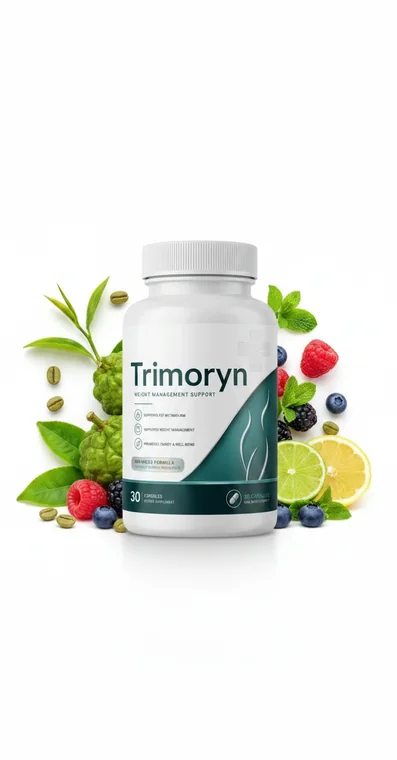
This guide compares all three honestly so you can self-select rather than be sold. We will lay out what the numbers really say, where the costs land, and where a low-cost daily formula such as Trimoryn genuinely fits — and, just as importantly, where it does not.
What "best weight loss pills" actually means in 2026
The first fix is to stop treating "best weight loss pills" as one category. In 2026 the phrase covers three tiers that answer three different questions. Prescription medicines answer "what produces the largest medically supervised weight loss?" Over-the-counter drugs answer "what is a proven pharmaceutical I can buy without a prescription?" And dietary supplements answer "what is a low-cost daily product that supports a diet I am already running?" Those are not the same question, and no product can top all three lists at once.
Confusion between the tiers is where most bad buying decisions happen. People compare a supplement's price to a prescription's results, or a prescription's cost to a supplement's convenience, and conclude that everything is either a rip-off or a miracle. The fairer approach is to judge each product against the job it is actually built for. Once the tiers are separated, the choice usually gets simpler, not harder.
The three categories, compared at a glance
Here is the honest shape of the market, stripped of marketing. Read the strength-of-evidence column as carefully as the results column, because a big number attached to weak evidence is worth less than a modest number attached to strong evidence.
| Category | Typical result | Rough cost | Access | Evidence |
|---|---|---|---|---|
| Prescription GLP-1 medicines | ~3–12% extra body-weight loss over a year vs placebo | High — often hundreds/month without insurance | Doctor-prescribed, monitored | Strong, from large trials |
| OTC drug (Alli / orlistat) | Blocks ~1/3 of dietary fat; modest added loss | Mid — multi-week starter packs | Over the counter, no prescription | Moderate, FDA-approved |
| Dietary supplements | Small, variable support around a diet | Low — cheapest daily option | Freely available | Weak to moderate, ingredient-dependent |
Notice what the table does not say. It does not name a winner, because the winner depends entirely on your situation. A person with a weight-related health condition and good insurance is looking at a different top row than someone who simply wants affordable daily help staying consistent with a plan they already follow.
Want the low-cost daily support tier?
If you are already handling diet and activity and want an affordable once-daily formula to help you stay consistent, the official page lists every ingredient, amount and supply option so you can judge it on the label.
See the Ingredients & PricingOver-the-counter drugs: what Alli actually does
If you want a genuine pharmaceutical without a prescription, the honest shortlist has one name on it. Alli — the half-strength over-the-counter version of orlistat — is the only weight-loss drug the FDA has approved for sale without a prescription. That is not a marketing line; it is a regulatory fact, and it instantly separates Alli from the hundreds of products that describe themselves as "clinically proven" while carrying no drug approval at all.
Alli works by a mechanism you can picture. It blocks the enzyme that breaks down dietary fat, so roughly one third of the fat you eat passes through undigested rather than being absorbed. That produces real, if modest, added weight loss on top of a reduced-fat diet. The trade-off is equally physical: eat a high-fat meal on Alli and the undigested fat produces well-documented digestive side effects, which is precisely why the product only works alongside a genuinely lower-fat diet. It is a drug with a job and a cost, and it does that job.
Where Alli sits, on the FDA questions and answers for orlistat, is the middle tier: stronger and better-evidenced than any supplement, weaker and cheaper than a prescription. For many people that is exactly the right rung. For others the side-effect profile is a dealbreaker, which is one reason the supplement tier exists at all.
Prescription pills and injections: the biggest numbers, the biggest costs
At the top of the results ladder sit the prescription medicines the NIH NIDDK describes for overweight and obesity, and in 2026 the conversation is dominated by the GLP-1 class. These are the products behind the headlines, and the headlines are, for once, mostly earned. In large trials, GLP-1 medicines have added on the order of three to twelve percent extra body-weight loss over a year compared with placebo — a meaningfully larger effect than anything the other two tiers can claim.
Two caveats keep that number honest. First, these are prescription medicines, prescribed and monitored by a clinician, with eligibility criteria, side effects and follow-up built in. They are not something to be reverse-engineered from a supplement aisle. Second, the cost is steep: without insurance coverage, monthly outlay can run into the hundreds of dollars, and that cost is ongoing. The strongest results in the category come attached to the highest price and the tightest access — which is the fundamental trade-off the whole market is built around.
This is also the tier where honesty matters most, because it is the one supplement marketing most often borrows from. No dietary supplement is a GLP-1 medicine, none matches those trial numbers, and any product implying otherwise is misleading you. If your weight is affecting your health, the prescription conversation belongs with a doctor, not with a checkout button. We spell out that boundary in more detail in our look at whether a supplement can cause weight loss on its own, and the short version is that the categories are not interchangeable.
Supplements: modest, daily, low-cost support
So where do dietary supplements land in a fair comparison of the best weight loss pills? Below the drugs, plainly — and that is not a criticism, it is a category definition. Supplements are not obesity medicines. Their job is to offer low-cost daily support around a diet you are already running, and the honest ones say exactly that on the label.
The effects are real but small and ingredient-dependent, which is how the NIH Office of Dietary Supplements characterises the whole supplement tier. Some thermogenic botanicals produce a measurable rise in energy expenditure; some fibres slow digestion and blunt appetite; some cofactors support fat metabolism. None of these individually rewrites your week, and pooled reviews from bodies such as the NIH Office of Dietary Supplements consistently describe the category's weight effects as limited and generally small. What a well-built formula can do is make a diet slightly easier to keep to — and adherence, repeated over months, is what actually decides outcomes.
This is the tier Trimoryn is built for. It is a once-daily capsule whose label lists Konjac glucomannan fibre, mangosteen, prickly pear and cinnamon bark extracts, alpha-lipoic acid, turmeric, berberine HCl, resveratrol and two probiotic strains — a low-cost daily support product, priced accordingly, especially on multi-bottle supplies. It is not competing with a GLP-1 injection on results, and it does not pretend to. It is competing on being affordable, transparent and easy to take every day. If you want the ingredient-by-ingredient view before deciding, our full breakdown of what Trimoryn contains goes through each active without inflating the weak ones.
Two objections worth answering honestly
"If drugs work better, why consider a supplement at all?" Because "works better" and "fits my situation" are different tests. Prescription medicines require eligibility, a prescriber and a budget that many people do not have month after month; Alli's side effects rule it out for some. A low-cost daily supplement is the option that is actually available, affordable and repeatable for a large group of people who are already doing the diet-and-activity work and want something to help them stay consistent. The best pill you will actually take every day beats a stronger one you cannot access or afford.
"Aren't all supplements basically the same overpriced powder?" No — and the differences are where your money is won or lost. The gap between a fair supplement and a poor one is transparency: honest dosing on the panel, third-party testing, and modest wording rather than disease claims. A common trick is to spread a formula across a multi-capsule serving so the panel shows amounts closer to studied doses than a single capsule delivers, a tactic we unpack in our guide to serving-size tricks that inflate a supplement label. Judge supplements on dose and disclosure, not on the size of the promise.
How much do the top options really cost?
Cost is where the three tiers separate most sharply, and it deserves a clear-eyed look because it often decides the outcome more than results do. Prescription GLP-1 medicines are the most expensive by a wide margin, frequently hundreds of dollars a month without insurance, and that spend continues for as long as you take them. Alli occupies the middle: a multi-week starter pack is a moderate one-off outlay, repeated as needed. Supplements are the cheapest tier, particularly on multi-bottle supplies where the per-day cost drops well below either drug.
The right way to read those numbers is always cost against evidence. Paying a premium for the strongest, best-evidenced result can be entirely rational if your health warrants it. Paying a premium for a supplement making drug-sized promises is not — that is the exact mismatch to avoid. If you want the specifics of what the daily-support tier costs and how the guarantee works, our companion piece on Gut Health Supplements Lactose Free: Allergen Statements and Cross-Contamination lays it out in full.
Which is right for your situation?
Strip away the marketing and the decision usually resolves into three plain paths. If your weight is affecting your health, start with a doctor and the prescription conversation — that tier exists for exactly that reason, and it produces the largest results. If you want a proven over-the-counter drug and can work with a lower-fat diet, Alli is the evidence-backed OTC choice. And if you are already handling the substantive work of diet and activity and want affordable, honest daily support to help you stay consistent, a transparent supplement is a reasonable fit — as an aid to the plan, never as the plan itself.
That framing survives contact with the evidence, which is more than can be said for "this one pill is the best for everyone." The best weight loss pills for you are the ones matched to your health, your budget and your access — not the ones with the loudest headline.
Medical note: this article is general information, not medical advice. Prescription weight-management medicines must be prescribed and monitored by a qualified clinician. Speak to a healthcare professional before starting any pill or supplement, especially if you are pregnant, nursing, caffeine-sensitive, taking medication or managing a health condition.
Scientific references
- NIH Office of Dietary Supplements — Dietary Supplements for Weight Loss
- U.S. FDA — Questions and Answers about Alli (orlistat)
- NIH NIDDK — Prescription Medications to Treat Overweight & Obesity
- Mayo Clinic — Prescription weight-loss medication
- Harvard T.H. Chan School of Public Health — Healthy Weight
Related reading
Frequently asked questions
What are the best weight loss pills in 2026?
There is no single best weight loss pill for everyone. The strongest results come from prescription GLP-1 medicines, the only proven over-the-counter drug is Alli, and dietary supplements sit below both as modest, low-cost daily support. The best option depends on your health, your budget and whether you qualify for a prescription.
Do supplements or drugs work better?
On the raw numbers, drugs work better. Prescription GLP-1 medicines can add roughly 3 to 12 percent extra body-weight loss over a year, and OTC Alli blocks about a third of the fat in a meal. Supplements produce smaller, less certain effects and are best understood as support around a diet rather than a substitute for medication.
How much do the top options cost?
Cost varies widely. Prescription GLP-1 medicines can run into hundreds of dollars a month without insurance, OTC Alli sits in the mid range for a multi-week starter pack, and daily supplements are usually the cheapest option, especially on multi-bottle supplies. Always weigh cost against the strength of the evidence behind each choice.
Which is right for my situation?
If your weight is affecting your health, speak to a doctor about prescription options first. If you want an over-the-counter drug, Alli has the clearest evidence. If you are already working on diet and activity and want low-cost daily support to help you stay consistent, a transparent supplement can fit — as an aid to the plan, never as the plan itself.
Where can I buy Trimoryn as a daily supplement option?
Trimoryn is available on its official website as a daily capsule supplement. Check the page for current kits and the money-back details.
Looking for the affordable daily-support option?
Trimoryn is built for the low-cost daily tier — a once-daily formula to support a diet you are already running. The official page carries the current ingredient amounts, directions, supply options and guarantee so you can judge it on the label.
Check the Official Page